Hollywood Sign Hike: Trails And When A Tour Is Easier
The Hollywood Sign is fenced, monitored and closed to public contact, but two legal trails in Griffith Park reach the Mt. Lee summit above it. Here is how the access rules, parking and shuttle work, and when a van or bus tour that passes the sign is the simpler plan.
Short answer
No, you cannot walk up to or touch the Hollywood Sign: it sits inside a fenced, camera-monitored restricted area. Legal hikes reach the Mt. Lee summit above it via the Mt. Hollywood Trail from Griffith Observatory or the Brush Canyon Trail from Canyon Drive. Griffith Park is open about 5:00 AM to 10:30 PM daily.
The Hollywood Sign stands on the southern slope of Mount Lee in Griffith Park, and the single most common misconception about it is that a trail exists to the letters themselves. There is none. The sign sits behind fencing in a restricted area with cameras and LAPD monitoring, and no public route touches it, climbs it or reaches its base. What hikers call "the Hollywood Sign hike" is really a hike to the Mt. Lee summit above and behind the sign, where the letters appear below the viewpoint along the ridge. The distinction matters, because the routes that promise a closer look than that are the ones that get people turned around by park rangers.
The good news is that the legal alternatives are genuinely good. Griffith Park is one of the largest municipal parks in North America, open roughly 5:00 AM to 10:30 PM daily, and its trail network puts the sign in view from multiple ridgelines without any permit or fee. Access is free, the trails are open year round, and Los Angeles averages under three rain days per month from April through November, which makes the planning question less about weather windows and more about parking and daylight. This guide lays out the access rules, the two recognized legal routes to the summit, the parking and shuttle logistics that trip up most visitors, and the cases where a tour vehicle that simply drives past the sign is the easier day.
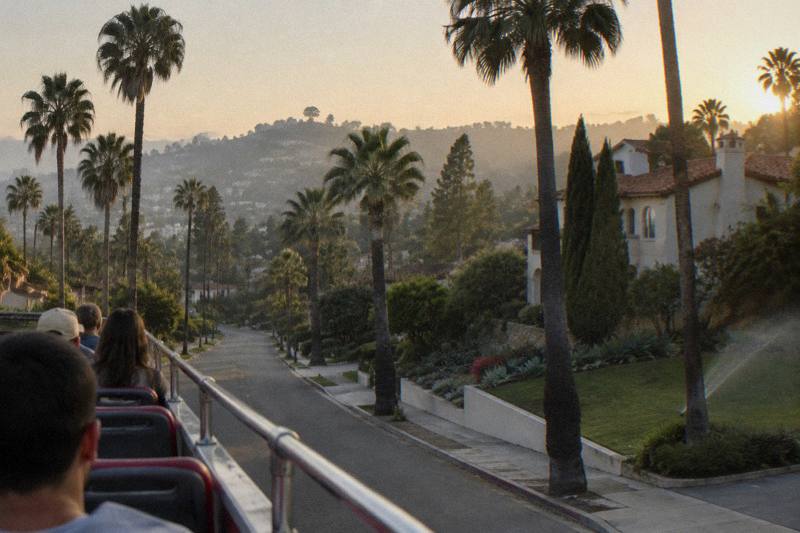
For many travelers the sign is one item on a longer Hollywood list, and that changes the math. A visitor who also wants a working studio lot, the Walk of Fame or Beverly Hills may find that a bundle such as the Warner Bros. Tour & Celebrity Homes Tour Package, which passes the Hollywood Sign on a 2-hour guided drive between the studio lot and the celebrity streets, covers the viewing need entirely while adding experiences no trail can offer. More on that trade-off below. If you were hoping to simply steer yourself up for a closer look, our guide to reaching the Hollywood Sign by car explains why the roads dead-end well below the letters and which legal options still deliver a rewarding view.
Can You Hike To The Hollywood Sign Itself?
No. The Hollywood Sign is closed to public access: it stands inside a fenced, camera-monitored restricted area, and touching, climbing or walking up to the letters is prohibited and enforced. Legal hikes in Griffith Park reach the Mt. Lee summit above and behind the sign, from which the letters sit below the ridge. No trail of any kind ends at the sign itself.
The official FAQ at the Hollywood Sign's own information site states the rule plainly: there is no public access to the sign, and the area around it is fenced and monitored. That is not a soft guideline. The restricted zone is patrolled, and the trails that once threaded close to the letters have been closed for years. Visitors who ignore the closures, hop fences or follow unofficial paths cut toward the sign face citations, and the neighborhoods bordering the park on the Lake Hollywood side have grown vocal about trespassing foot traffic, which is one reason the street parking restrictions described later in this guide exist.
So the honest framing is this: a "Hollywood Sign hike" is a hike to viewpoints of the sign. The Mt. Lee summit is the best known of these, sitting above and behind the letters, so the sign appears below you rather than towering over you. Other ridgeline viewpoints, including sections of the Mt. Hollywood Trail, put the sign in frame across a canyon at various distances. All are legal, all are free, and none require a permit.
One more rule worth knowing before you plan: the sign's lighting is minimal and the park's trails are unlit, so a summit attempt belongs to daylight hours. Griffith Park's roughly 5:00 AM to 10:30 PM open window sounds generous, but a sunset finish is the sensible plan, and in summer, when downtown Los Angeles averages a high of 84 degrees Fahrenheit in August, an early start is the comfortable one.
The Legal Trails To The Mt. Lee Summit
Two recognized legal routes reach the Mt. Lee summit above the sign: the Mt. Hollywood Trail, reached from Griffith Observatory, and the Brush Canyon Trail, reached from Canyon Drive at the end of the park's eastern canyon road. Both are free, unmaintained dirt and fire-road paths inside Griffith Park, open during park hours. Neither trail touches the sign, and both end at viewpoints above or across from it.
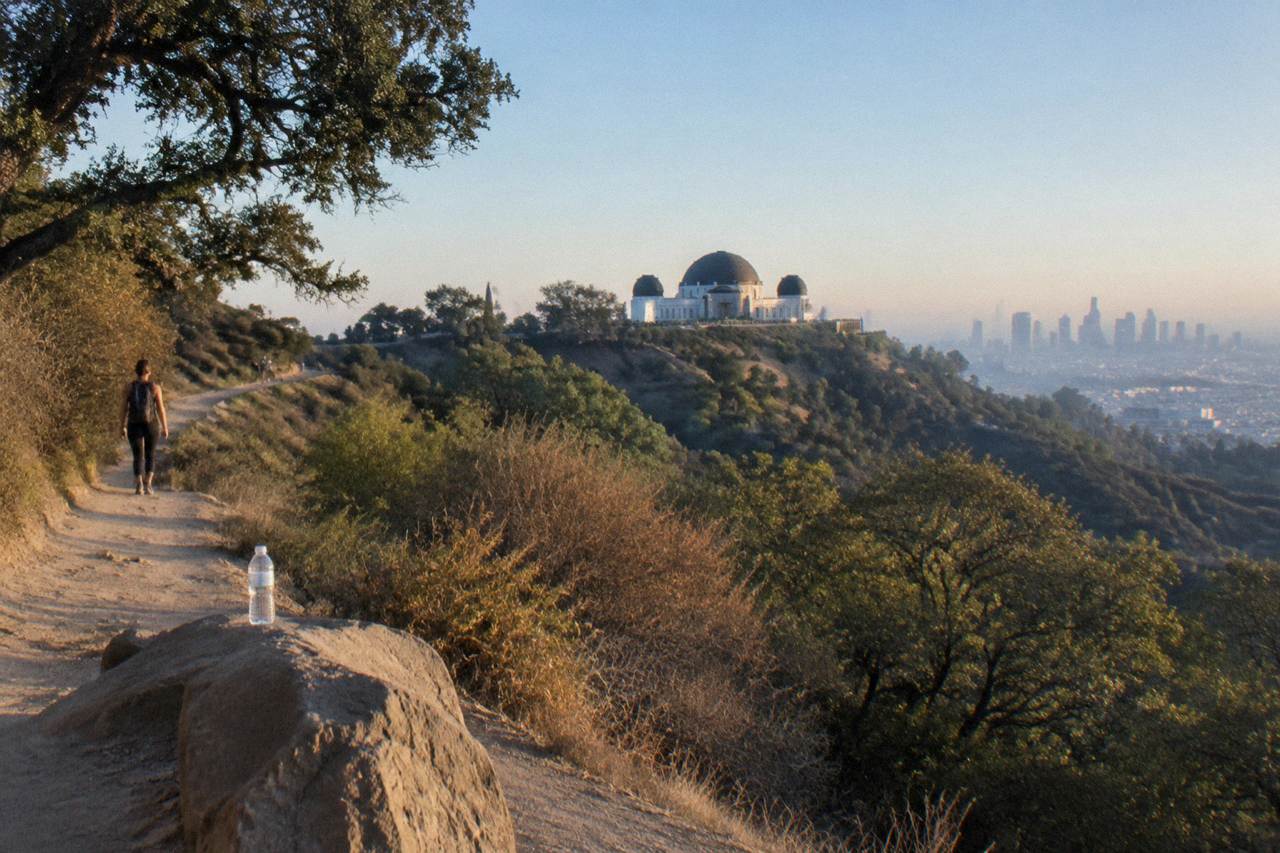
The Mt. Hollywood route is the classic approach. It starts near Griffith Observatory, climbs the fire road that runs the ridge south of the summit, and connects along the ridge toward Mt. Lee. The reward along the way is layered: the observatory itself, the Los Angeles basin spreading south, and the sign appearing across the canyon as the trail wraps north. Because the trailhead sits at the observatory, this route doubles as the easiest way to combine a sign viewpoint with the park's most popular attraction, and the observatory's own terrace is a legitimate sign viewpoint for anyone who wants the view without the climb.
The Brush Canyon Trail is the canyon-side alternative. It begins at the end of Canyon Drive, climbs the western wall of Bronson Canyon, and meets the ridgeline system that leads toward Mt. Lee. Its best known feature is the approach from below and behind, which gives the sign a different scale than the observatory-side views. The trailhead is also closer to the Lake Hollywood neighborhood, which matters for parking, discussed in the next section.
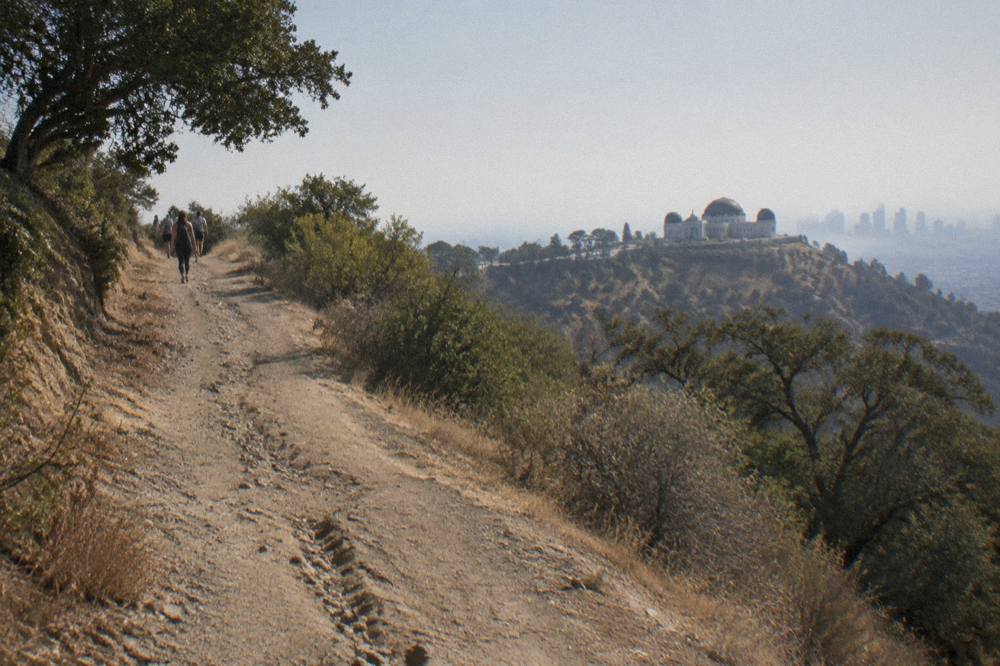
The park does not publish distance, elevation gain or time estimates for either trail, so allow a generous margin in your day. Treat any third-party figure you see elsewhere with caution: trail apps and listicles routinely quote numbers that the park's own materials do not confirm. What is well established is the character of the routes: wide fire roads rather than singletrack, exposed to sun for most of their length, shared with dogs on leash and, on the observatory side, with a steady stream of walkers of all fitness levels.
| Route | Trailhead | What you reach | Character | Cost |
|---|---|---|---|---|
| Mt. Hollywood Trail | Griffith Observatory area | Ridgeline viewpoints, connect to Mt. Lee summit | Wide fire road, exposed, busiest | Free |
| Brush Canyon Trail | Canyon Drive, end of road | Canyon climb to ridgeline, sign from below and behind | Dirt and fire road, exposed | Free |
| Observatory terrace | Griffith Observatory | Distant sign view across the canyon | Paved, no hike required | Free |
For visitors whose real goal is a photograph rather than a summit, the table's third row deserves emphasis. The observatory terrace delivers a genuine sign-and-city composition with zero elevation gain, and it is reachable by the DASH shuttle described later in this guide. Plenty of travelers hike all morning and then realize their favorite frame came from the paved viewpoint anyway.
If the day is too hot, too short or simply spoken for, the sign is also visible from a vehicle on several routes through the hills, and tour packages have grown up around exactly that fact. The Warner Bros. Tour & Celebrity Homes Tour Package is built for the visitor who wants a working studio lot in the morning and a guided pass by the sign, the Walk of Fame, Beverly Hills, Rodeo Drive, Mulholland Drive and the Sunset Strip in the afternoon, with a round-trip shuttle handling the studio transfer. Its companion, the Warner Bros. Studio Tour & 24-Hr Hop-On Hop-Off Bus Package, adds a 24-hour hop-on hop-off ticket with a multilingual audio guide instead of the live homes commentary, useful if you want to break away and explore Hollywood Boulevard on foot.
Parking Near The Trails: What Actually Works
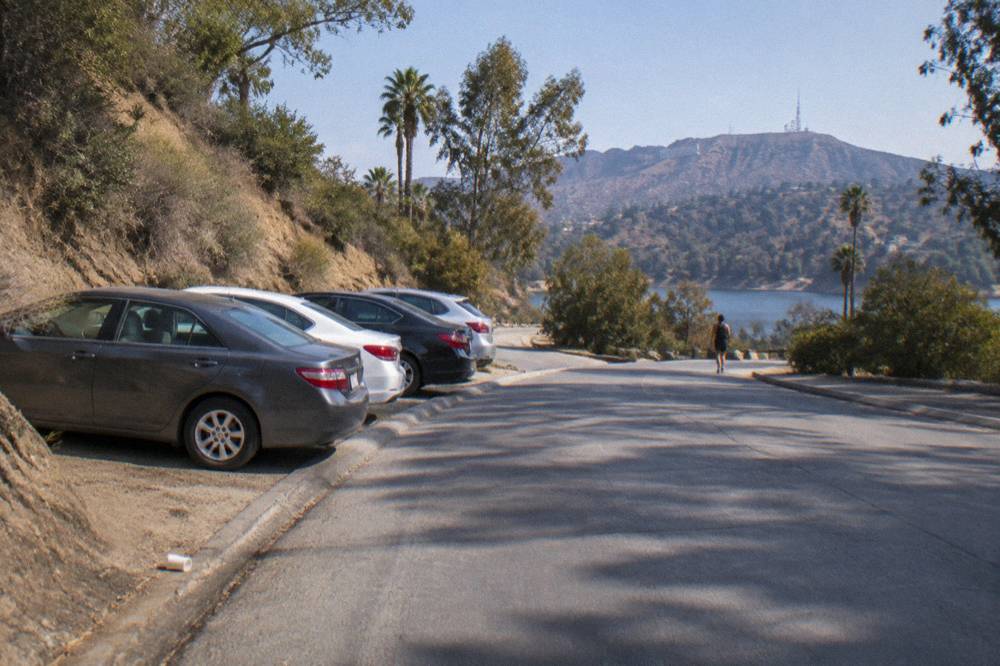
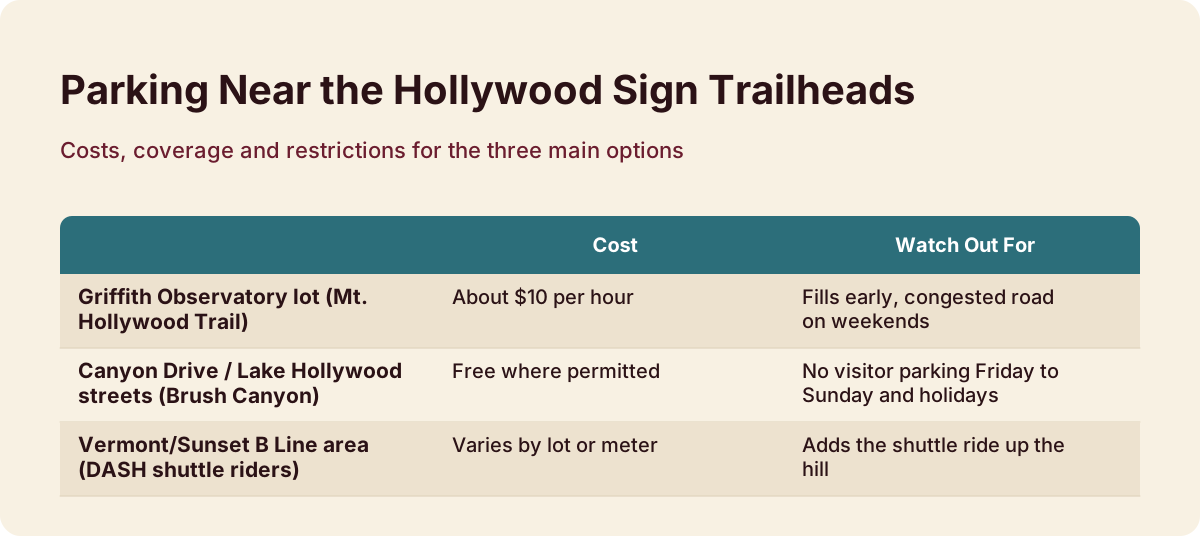
The paid lot at Griffith Observatory costs about $10 per hour and fills early, so it is the convenient option only for a morning start. Street parking near Lake Hollywood is restricted, with no visitor parking on Friday to Sunday and holidays. Weekdays are quieter across every trailhead lot and neighborhood street in the area. On busy days, arriving early or using the shuttle is the reliable plan.
The Observatory lot is the trailhead parking for the Mt. Hollywood route, and its reputation for filling early is earned. On weekends and holidays, the lot and the narrow road leading to it congest well before midday, and circling adds an unplanned hour to the outing. The roughly $10 per hour rate is the trade for being steps from the trailhead and the terrace viewpoint. If the hike is the priority, aim to be parked before late morning; if the day runs later, park lower and ride the shuttle up, covered in the next section.
The Lake Hollywood side, which serves the Brush Canyon and Canyon Drive access, plays by different and stricter rules. The residential streets near Lake Hollywood and Canyon Lake Drive prohibit visitor parking from Friday through Sunday and on holidays, a restriction enforced since 2026 precisely because sign-bound traffic overwhelmed the neighborhood. A weekday visit sidesteps the restriction entirely and finds the streets quieter. Rideshare works on both sides of the park.
| Parking option | Serves | Cost | Watch out for |
|---|---|---|---|
| Griffith Observatory lot | Mt. Hollywood Trail | About $10 per hour | Fills early, congested road on weekends |
| Canyon Drive and Lake Hollywood streets | Brush Canyon Trail | Free where permitted | No visitor parking Friday to Sunday and holidays |
| Vermont/Sunset B Line area | DASH shuttle riders | Varies by lot or meter | Adds the shuttle ride up the hill |
Park legally or not at all: the neighborhoods bordering the park have active enforcement and towing, and a citation costs more than a year of observatory parking. If the parking math looks grim on the day, that is the moment to consider whether the hike is the right version of the sign at all. A hop-on hop-off Hollywood route or a private van day passes the sign without a single parking decision on your side, and the Starline packages bundle that comfort with a studio lot.
Getting There Without A Car: The DASH Observatory Shuttle
The DASH Observatory shuttle runs daily from about 10:00 AM to 10:00 PM between the Vermont/Sunset Metro B Line station and Griffith Observatory, solving both parking and traffic in one move. Ride the B Line to Vermont/Sunset, then the shuttle up the hill. For the Warner Bros. lot and Universal, the B Line and connecting buses reach those too, making a car-free Hollywood day entirely workable.
The shuttle is the underused answer to the observatory parking problem. Its stop at Vermont/Sunset sits directly on the Metro B Line, the subway that also serves Hollywood Walk of Fame stations and Universal City, so the same train that brings you into Hollywood delivers you to the shuttle for the observatory and the Mt. Hollywood Trail trailhead. From the observatory end, the return shuttle removes the downhill-plus-transit slog at the end of a hot afternoon. Times of roughly 10:00 AM to 10:00 PM daily mean it covers a full daylight visit in every season. More of these guides are collected on Hollywood Studio Tours.
The same logic extends across the city's studio attractions. The Warner Bros. Studio Tour in Burbank is reachable by the B Line to Universal/Studio City or North Hollywood and then Metro bus 222 or 501, or by Metrolink to Burbank-Downtown and the BurbankBus Pink Route; Metrolink publishes a studio tour itinerary on its own site at metrolinktrains.com. Universal Studios Hollywood is the easiest of all: the B Line to Universal City/Studio City and the free Universal shuttle from the station to the park entrance. A visitor can hike to a sign viewpoint in the morning and stand on a soundstage lot in the afternoon without renting a car.
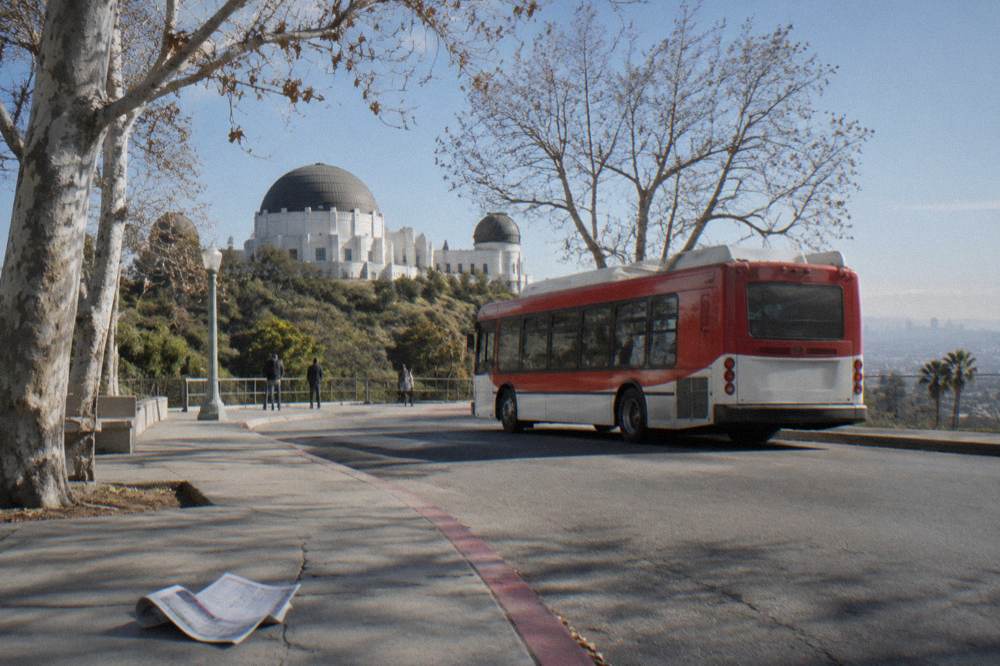
The shuttle does have a fit profile. It serves the observatory side of the park, so the Brush Canyon trailhead on Canyon Drive is not its natural pairing, and its roughly 10:00 AM first run is late for a serious-heat-day summit attempt. For the majority of visitors, whose sign goal is the classic observatory-plus-viewpoint morning, it is the single best logistics decision available.
Car-free or not, some days call for someone else doing all the driving. The Warner Bros. Studio Tour & 24-Hr Hop-On Hop-Off Bus Package is designed around exactly that: the studio handles the lot ticket, a round-trip express shuttle connects the Hollywood visitor center to Burbank, and the hop-on hop-off route with multilingual audio passes the Hollywood Sign, the Dolby Theatre, Beverly Hills and the Walk of Fame at your own pace for a full day.
When A Tour Beats The Hike
A tour is the better choice when the sign is one of several goals rather than the goal: bundles with a studio lot visit, a homes tour or hop-on hop-off route pass the sign by vehicle, and the private TMZ-style van day adds hotel pickup and photo stops outside the gates of Universal, Paramount, Sony and Fox. Ratings on these packages run 3.5 to 4.5 with free cancellation up to 24 hours on most.
Be honest about what kind of traveler you are. If the sign is a photograph on a list that also includes a soundstage, the Walk of Fame and Rodeo Drive, a half-day of hill climbing in 80-degree sun buys you one item on that list at the cost of two others. The vehicle alternatives buy you the sign as a view from Mulholland Drive or a canyon rim, plus everything else on the itinerary, with air conditioning between stops.
The comparison is not close on time. The hike is a half-day commitment including parking or the shuttle. The Warner Bros. Tour & Celebrity Homes Tour Package runs about 8 hours total but covers the 3-hour studio tour, a 2-hour Celebrity Homes and Lifestyle tour, and a drive past the TCL Chinese Theatres, Dolby Theatre, Hollywood Sign, Walk of Fame, Beverly Hills, Rodeo Drive, Mulholland Drive and Sunset Strip, with the round-trip studio shuttle included. Its rating sits at 3.7 from 225 reviews, from $102 per person, and cancellation is free up to 24 hours. The rating runs below the direct studio tour alone, which holds 4.6 from 8,727 reviews, from $79, so read the package honestly: the draw is the transport and the bundle, not a better lot experience.
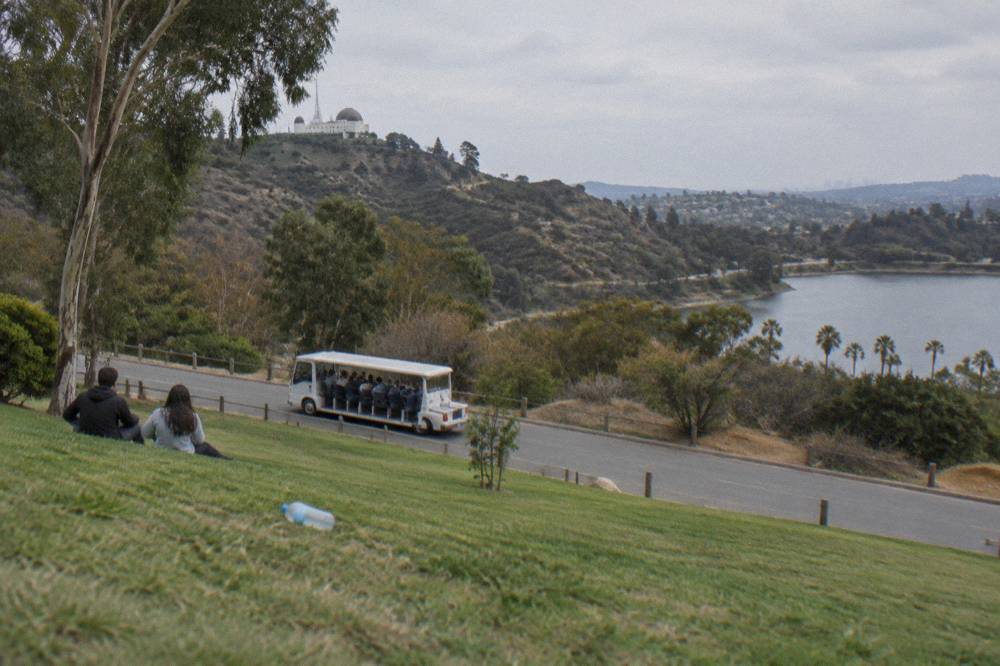
At the private end, the Hollywood Film Studios & TMZ Private Day Tour runs 8 hours in a private van with a private guide, from $699.30 per group, and it is the only style of product here with genuine hotel pickup and drop-off within a 12-mile radius of Hollywood. Its route is a drive-by: photo stops outside the gates of Universal, Paramount, Sony and Fox, TMZ, Hollywood Sign views, and the celebrity streets of Beverly Hills and the Sunset Strip. It is not a lot tour, and it does not pretend to be; it is a full-day sightseeing sweep for a group that wants the gates and the sign from the road, at 4.5 from 3 reviews.
| Option | Time | Price | Sign viewing | Best for |
|---|---|---|---|---|
| Hike to Mt. Lee summit via Mt. Hollywood or Brush Canyon | Half day | Free (parking or shuttle extra) | On foot, above the sign | The sign as the main goal |
| WB Tour & Celebrity Homes package | About 8 hours | From $102 pp | Drives past on the homes tour | Studio lot plus sights, one booking |
| WB Studio Tour & 24-Hr Hop-On Hop-Off | About 8 hours plus bus day | From $112 pp | Bus route passes the sign | Independent exploring at own pace |
| Private TMZ-style van day | 8 hours | From $699.30 per group | Photo stop viewpoint | Groups, hotel pickup, full sweep |
One more angle for the undecided: the cheapest listing in this whole space is not a sign product at all but the Film Freak location tour at from $49.99 per person, a 2-hour small-group van tour of movie locations around Hollywood Boulevard, and the broader choices are compared in the Los Angeles studio tours overview (see Movie Locations Tour). The sign does not need to anchor the entire day.
What To Expect On The Trails Themselves
Expect wide, exposed fire roads rather than shaded singletrack, sun for most of the route, and shared use with dog walkers and steady foot traffic on the observatory side. There is no water, cell coverage is uneven in the canyons, and the park closes to vehicles and thins out after dark around 10:30 PM. Bring more water than seems reasonable, a hat, and a start time that beats the heat.
The Mt. Hollywood side is social. Neither side has facilities beyond the trailhead end: the observatory has water fountains and restrooms, Canyon Drive does not, so fill bottles before you start.
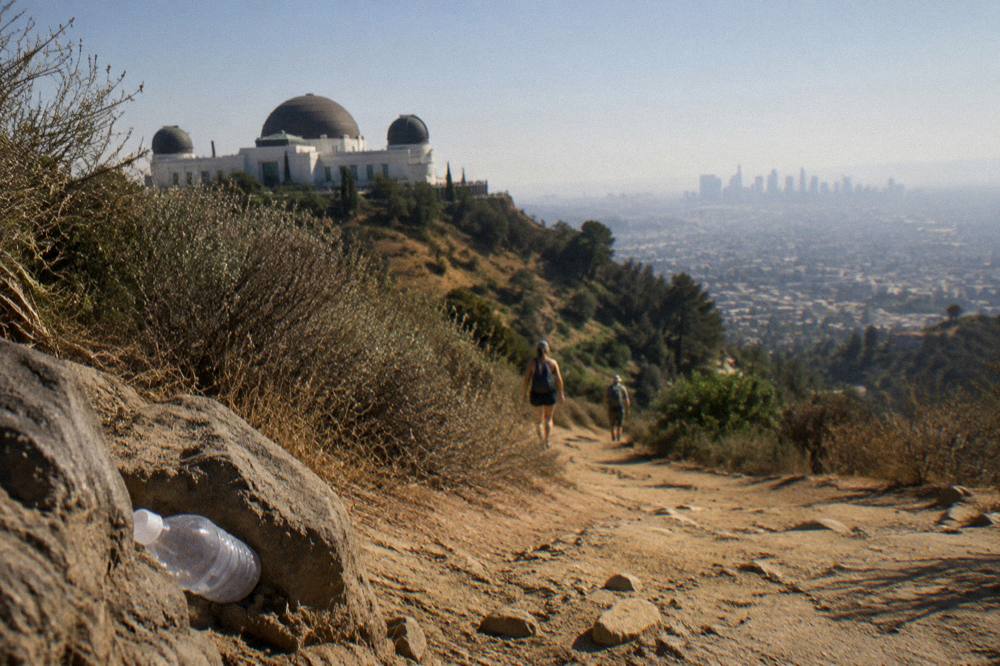
Heat is the real hazard, and it is seasonal in a predictable way. Downtown Los Angeles averages highs of 67.4 degrees in December and 68 in January and climbs to 84 degrees in August, with 83 in September, and rain days stay under three per month from April through November, per the NOAA 1991 to 2020 normals. Translation: the trails are dry and sun-baked almost year round, the question is only how hot, and the answer is hike by 9 AM from June through September. Winter flips the problem pleasantly, with jacket mornings and clear-air views after rain, at the cost of about six rain days in January and February.
| Month | Average high (F) | Average rain days | Hiking note |
|---|---|---|---|
| January | 68.0 | 6.1 | Clear post-rain views, cold mornings |
| April | 72.4 | 2.8 | Comfortable all day |
| July | 82.0 | 0.4 | Start early |
| August | 84.0 | 0.1 | Hottest, start by 8 AM |
| October | 78.6 | 2.2 | Warm afternoons |
| December | 67.4 | 5.5 | Mild, occasional rain |
The summit itself is an anticlimax in the best way: a dirt high point, a fence, and the sign sitting below and in front of you down the slope. Photographs from up there read differently from every postcard, because the letters appear behind you relative to the city, the classic front-on sign-plus-basin composition belongs to the viewpoints on the way. Take the ridge views on their own terms; they span from the ocean on clear days to the San Gabriels behind you.
For all the trail talk, plenty of visitors land on a middle path: a short morning on the observatory side, then a booked afternoon elsewhere. The Warner Bros. Studio Tour with Shuttle & Bus Tour Package fits that pattern, pairing about 2.5 hours on the Burbank lot with a 2 to 2.5 hour Hollywood tour, from $102 per person, choosing either the Celebrity Homes tour or the 24-hour hop-on hop-off route.
Season And Timing: The Honest Answer
There is no official busy-season statement or crowd calendar for Griffith Park's trails, the observatory lot or any studio tour here. What is documented: park hours about 5:00 AM to 10:30 PM, weekday streets and lots quieter than weekends, parking restricted Friday to Sunday near Lake Hollywood, and the DASH shuttle running daily about 10:00 AM to 10:00 PM. Weather, not crowds, is the plannable variable.
Weekdays are simply quieter, on the streets, in the observatory lot and on the trails, and that single fact does more scheduling work than any calendar. Combine it with the rain-day table above and the plan writes itself: any weekday morning from October through May, an early weekday start in summer, and weekends saved for shuttle-and-observatory days where parking is someone else's problem.
Two dated realities belong in a late-2026 plan. The Holidays at Universal event runs November 21, 2026 to January 3, 2027 and is included with park admission, so a sign hike plus a Universal day in that window is a strong pairing, with the B Line linking the observatory shuttle and the park. And the 99th Academy Awards take over the Dolby Theatre on Sunday, March 14, 2027, with street closures expected around Hollywood Boulevard and Highland in the days before, which will complicate the Hollywood side of any sign-plus-Hollywood itinerary that week.
A final word on the sign itself, from its own FAQ at hollywoodsign.org: the structure is monitored and fenced, and the official guidance is unambiguous that the summit trails are the legitimate way to see it up close. Treat every social media route that seems to end closer than Mt. Lee as fiction until proven otherwise.
If hiking is off the table entirely, the celebrity homes and studio packages compared here cover the sign from a vehicle, and the full studio tour comparison ranks the lot tours those packages feed into. A car-free plan is covered in detail in the Warner Bros. parking and transit guide.
Common Questions About The Hollywood Sign Hike
Can you touch the Hollywood Sign?
No. The sign sits inside a fenced, camera-monitored restricted area with no public access of any kind, and the closures are enforced. Legal hikes reach the Mt. Lee summit above the sign, never the letters.
Which trail goes to the Hollywood Sign?
None. The two recognized legal routes, the Mt. Hollywood Trail from Griffith Observatory and the Brush Canyon Trail from Canyon Drive, reach the Mt. Lee summit above and behind the sign and viewpoints along the ridge.
Where do you park for the Hollywood Sign hike?
For the observatory side, the paid Griffith Observatory lot at about $10 per hour, which fills early. For Canyon Drive, free street parking where permitted, with visitor parking prohibited Friday to Sunday and holidays near Lake Hollywood.
Can you get to the Hollywood Sign without a car?
Yes. Take the Metro B Line to Vermont/Sunset and the DASH Observatory shuttle, running daily about 10:00 AM to 10:00 PM, up to Griffith Observatory and the Mt. Hollywood Trail.
Is a tour a better way to see the Hollywood Sign?
If the sign is one goal among several, yes. Packages such as the Warner Bros. tour and Celebrity Homes bundle drive past the sign alongside a studio lot visit, and a private van day adds hotel pickup and photo stops at the studio gates.
How long is the Hollywood Sign hike?
No distance, elevation or time figure is published in the park sources for this guide, so none is quoted here. Plan it as a half-day outing including parking or the shuttle, with an early start in the summer months.